
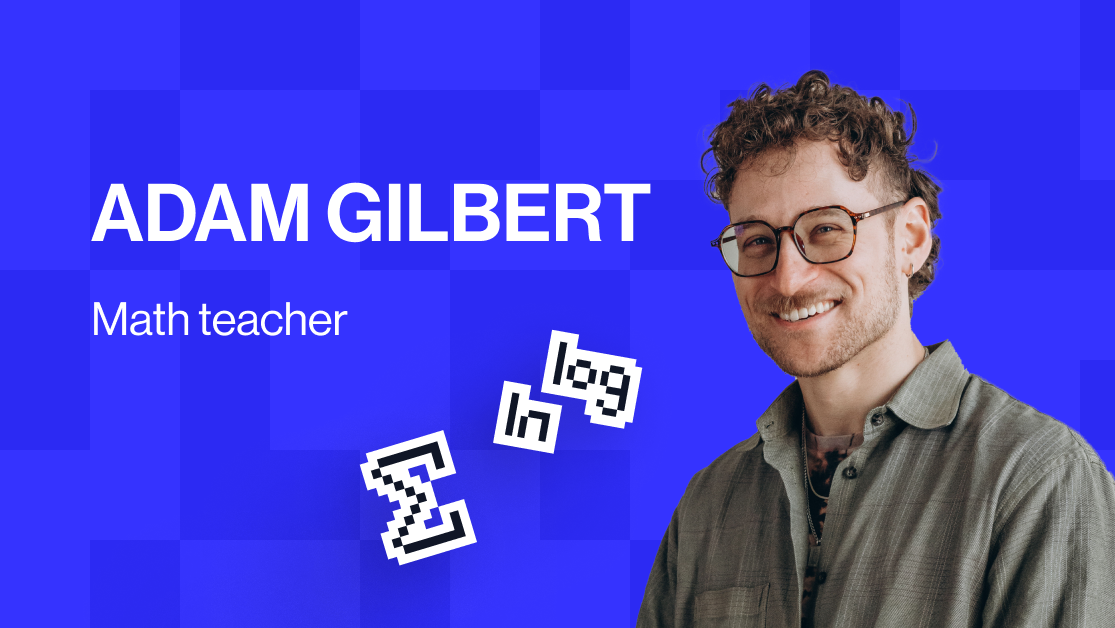
Adam Gilbert has always been fascinated by math - and nearly always excelled in it.
"I always loved math at school. At first it was because I was good at it. Then, as I got a little older I realised that you can apply math to anything," he begins when asked by this math-novice what it was about the subject which grabbed his attention.
"One of the big misconceptions with math, is that people don't realise how much they use it - and rely on it - in their lives. Being at least a little bit mathematically savvy can save you so many headaches as an adult, especially when it comes to things we all need like understanding interest rates on loans or mortgages."
It was in high school that Adam's enjoyment of the subject started to crystalise into something beyond a passing interest.
“I had a few teachers in high school that taught me to start thinking critically about the world. The more I looked around, the more I realised if you want to understand something complicated - like how oceans work, or how we can use earthquakes to understand the composition of the rocks beneath our feet - you need math.”
"I'd always been interested in seismology and geophysics, so it was a natural fit. One of my professors - Jan - was incredible. She was strict, but so welcoming and such a good educator at the same time, and she built this community of people who were desperate to learn."
Initially however, Adam found the jump from high school math into college-level Pure Math tough.
"I suddenly felt I was completely out of my depth. It felt like there had been this huge jump from what I'd learned in high school and I didn't have any guidance or anyone around me to help me bridge that gap. From being something I enjoyed, math suddenly felt unavailable and out of reach for me and it made me realise how important that support is for students as they move up."
Through finding additional support - and working hard - Adam caught up, and as the end of his studies drew close his thoughts turned to what he might do next.
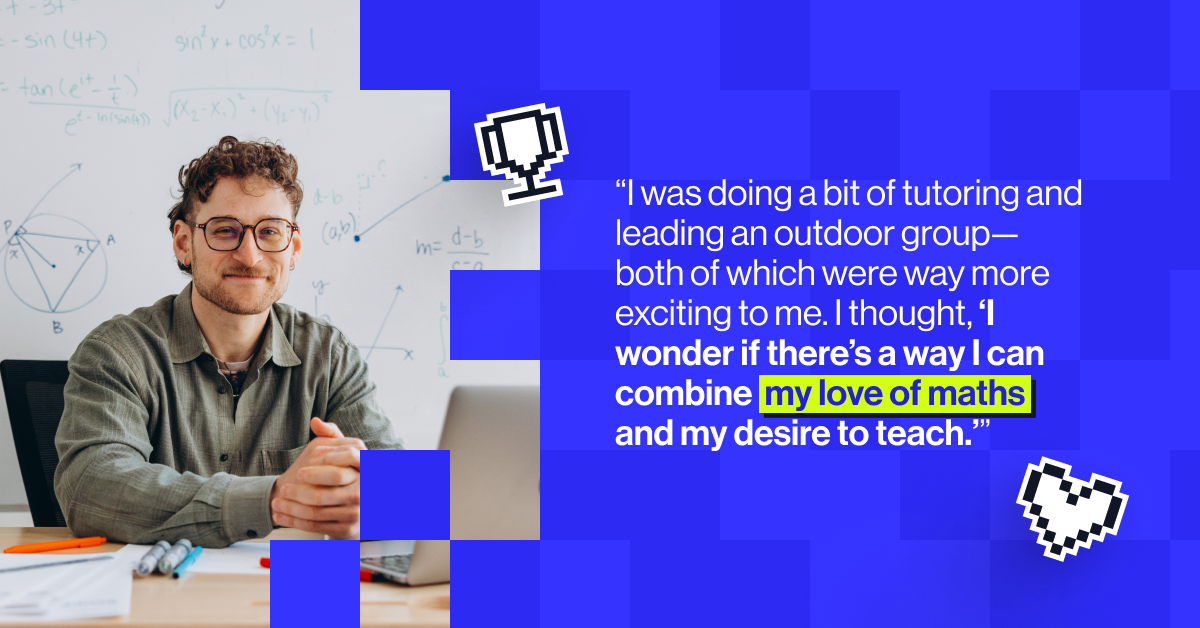
"I was doing a few different things; working on my thesis - which was a lot of sitting at a computer doing research, a lot of coding. I was also doing a bit of tutoring and leading an outdoor group - both of which were way more exciting to me. I thought, 'I wonder if there's a way I can combine my love of math and my desire to teach'. When I asked myself that question, the answer seemed pretty obvious," he smiles.
For Adam, the opportunity to help students overcome the struggles still fresh in his own mind of wrestling with a subject that feels beyond them was a big draw.
“It's so rewarding to be able to play a small part in helping kids - some of which are coming from really difficult situations - to overcome hurdles and achieve something that will help provide them with opportunities and to get ahead in life.”
"That's one of the reasons I joined MyEdSpace. Here, I can teach hundreds - thousands - of children all at once. Being able to help more children is incredible. It's also made me a better educator. Because now I'm not surrounded by the distractions that come with working in a school setting, I can focus more on the delivery of the lesson. Now, I can fully concentrate on explaining complicated concepts in the best, most effective way possible."
If you or your children would benefit from some additional math teaching, this year Adam is teaching Elementary Math, Pre-Algebra, and AP Precalculus.
Click the links for more information and to enrol today.
Keep Reading
More from the blog
Introducing Manhar Dalal
"I have my 8th Grade yearbook by my desk, in it they asked me 'What do you want to be when you grow up?' My answer was 'Math teacher' - so I have been on this train a long time," recalls a smiling new MyEdSpace math teacher Manhar Dalal.
Read article →Student GuideTop high-paying jobs and how to land them
High-paying jobs attract many people looking to boost their careers and income. The most lucrative careers often require specialized skills and education, making them worth pursuing.
Read article →